

The recent acquisition of KAS Eupen by Qatar Sports Investments (QSI), the majority owner of Paris Saint-Germain (PSG), has sent decisive shockwaves across Belgian football and illustrates a continuing strategic expansion in European football club ownership and sports management. This move not only aligns with QSI’s broader ambitions of building interconnected football ecosystems but also represents a new dawn for KAS Eupen as it shifts into a more ambitious phase of development under QSI’s direct stewardship.
By integrating KAS Eupen as a satellite club within its portfolio, QSI enhances its network that already spans prominent football establishments such as PSG and Braga. This expansion is poised to improve talent development, scouting capabilities, and commercial operations, reflecting a modern approach to club ownership and soccer investment that resonates throughout European football.
QSI’s Strategic Football Investments Shake Up Belgian Football Landscape
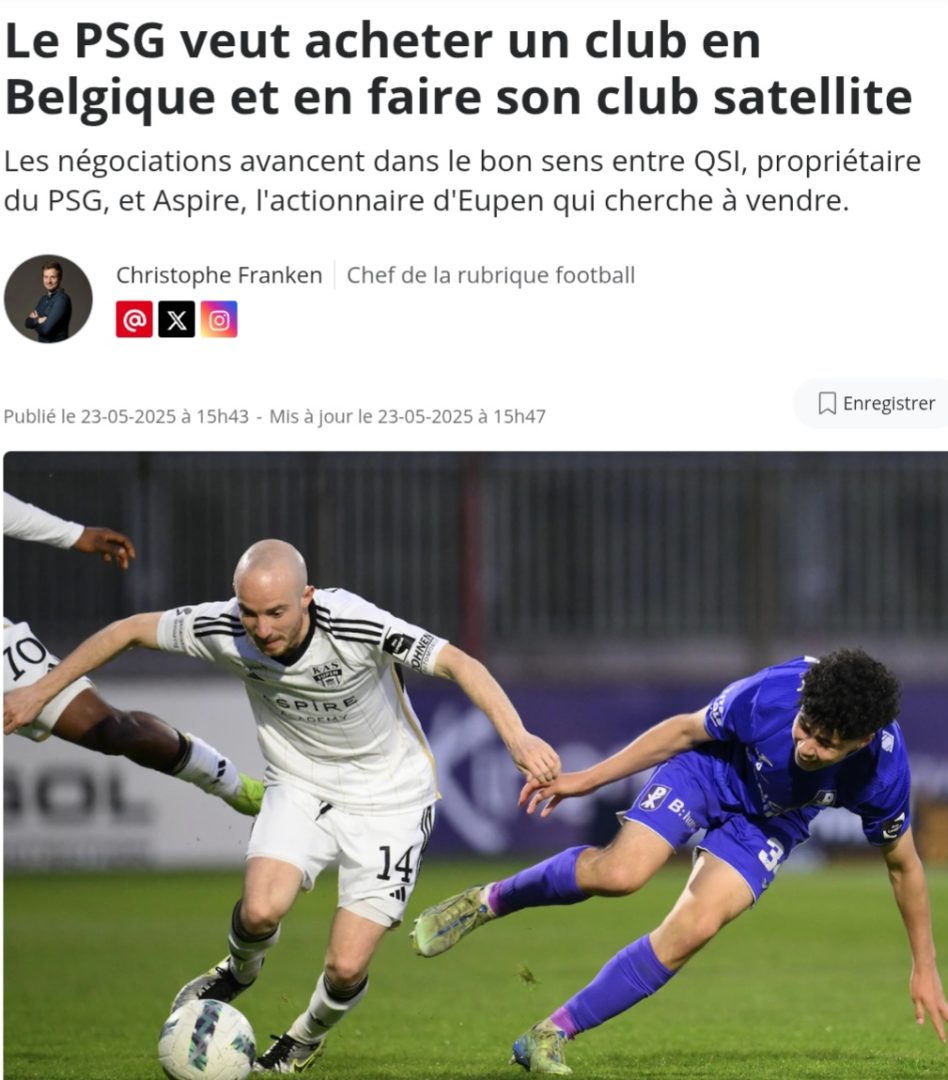
The acquisition of KAS Eupen by QSI marks a bold step in reshaping the Belgian football scene. Formerly under the ownership of Aspire Zone Foundation since 2012, Eupen transitions from indirect Qatari control to direct QSI ownership, a move confirmed by Nasser Al-Khelaifi, president of PSG and head of QSI. His vision involves harnessing “global expertise and passion” to build a competitive and commercially viable club that honors the heritage of KAS Eupen while pioneering modernization across all facets.

This strategic maneuver is part of a wider trend in sports management where investment groups like QSI pursue multi-club ownership models to leverage synergies in football transfers, youth development programs, and brand growth. Luis Campos, PSG’s influential football advisor, has been instrumental in overseeing this initiative by evaluating Eupen’s existing structure and preparing for an accelerated developmental strategy.
The Implications of QSI’s Ownership on Player Development and Infrastructure
QSI’s takeover anticipates significant enhancements in talent nurturing and infrastructure. By transforming Eupen into a satellite club, the organization aims to serve as an operational springboard for young talents, expanding on its scouting network already active at PSG and Braga. This shift promises to integrate Eupen into a broader football development ecosystem, fostering smoother player transfers and strategic football operations across these clubs.
Within Belgium’s Challenger Pro League, the club’s ambition is clear. QSI seeks to modernize Eupen’s training facilities, intensify youth academy focus, and extend commercial objectives to revitalize the club’s competitive profile. The partnership is expected to cultivate a more stable sporting future, drawing on the rich Danish football traditions of team development and progressive sporting philosophies.
Club Ownership and Football Transfers: New Dynamics with QSI’s Arrival
The integration of KAS Eupen into QSI’s portfolio alters the course of football transfers and ownership dynamics in Belgian football. With a stronger financial foundation and enhanced operational support from the Qatari group, Eupen is poised to participate more actively in the thriving transfer market, benefiting from PSG’s scouting insights and networks. This dual approach amplifies the club’s potential to attract emerging talents and participate effectively in European competitions.
Unlike other cases where satellite club arrangements have sparked concerns about local identity loss, Eupen’s unique position as a modest club within a smaller supporter base may facilitate smoother assimilation into QSI’s model. According to Christophe Franken, a seasoned Belgian football journalist, this acquisition is “good news” and could set a precedent by striking a balanced approach between player development and competitive success.
Commercial and Sporting Modernization Under QSI
QSI’s ownership promises to accelerate Eupen’s progress with an infusion of resources dedicated to commercial expansion and sporting innovation. This approach aims to render the club more competitive not only on the pitch but also in the commercial landscape of European football.
In tandem, the governance framework is designed for swift decision-making in sporting matters, reflecting QSI’s ambition to reduce transition frictions and map out a clearly defined future. Enhanced youth training programs and prospective infrastructure modernization serve as critical pillars in the remodeling of the club.
The backdrop to these developments situates QSI alongside other influential investors who leverage multi-club ownership to create synergistic benefits. Fans of Belgian football and observers of European soccer transfers will find this a pivotal moment, reshaping the contours of club ownership and soccer investment, and signaling new scales of ambition for the Challenger Pro League and beyond.
For those interested in deeper insights on related football betting markets and statistical trends, resources such as football betting markets and football statistics predictions provide comprehensive expert opinions. Moreover, players and enthusiasts may also explore the nuances of football accumulator tips and sound betting strategy tips to understand the impact of such high-profile acquisitions on competitive dynamics.