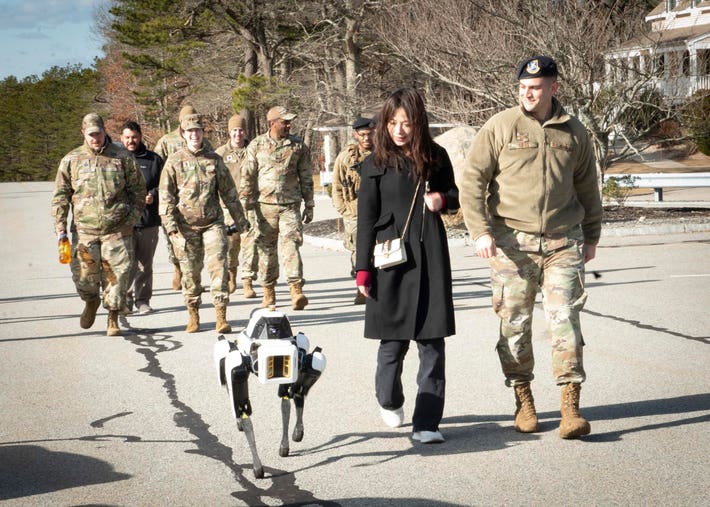

As the 2026 World Cup prepares to captivate audiences across North America, Mexico steps up its event security innovatively. In Guadalupe, a city in the country’s northeast, local authorities are deploying robotic dogs to bolster safety measures at the Estadio BBVA. This high-tech approach reflects a growing trend of integrating technology and robotics into public security, especially during internationally significant events.
Guadalupe’s investment of 120,000 euros on these robotic guardians aims to enhance the protection of both spectators and law enforcement personnel. Controlled remotely by officers, these machines are equipped with surveillance cameras and loudspeakers, providing real-time visuals and audio messages that can quickly defuse tensions before they escalate. Their deployment is specifically planned for situations that could turn unruly, positioning them as the first line of response to safeguard physical integrity.
Mexico’s Innovative Use of Robotic Dogs for Enhanced Security at the World Cup
Mexico’s strategy exemplifies a forward-thinking combination of innovation and practicality in securing one of the world’s most-watched sporting events. These robotic dogs not only extend the reach of human officers but also offer an imposing presence that can act as a deterrent to potential disruptions. The technology’s capacity to transmit live footage equips security teams with immediate insights, enabling quicker, safer decision-making amidst the dynamic environment of a football match.

Moreover, integrating robotics into surveillance operations aligns with broader trends seen in global sports events, where ensuring safety for vast crowds becomes increasingly complex. By combining human vigilance with autonomous tech, Mexico sets a precedent for reliable, multi-layered security frameworks ahead of this monumental tournament co-hosted by Canada, Mexico, and the United States.
Technological Precision Meets Public Safety: The Role of Robotics in Event Security
Deploying robotic dogs for security introduces a new paradigm in managing crowd behavior and risks. Remote control by trained officers allows for a seamless blend of human judgment and mechanical endurance. These devices, with their capacity for constant patrol and communication through speakers, help in issuing warnings or instructions promptly, reducing the chance of physical confrontations.
The Estadio BBVA’s choice to implement this technology underscores a commitment to public safety through robotics. By acting swiftly during incidents, these machines protect law enforcement officers from unnecessary exposure to danger, enhancing operational efficiency. This layer of technology-driven surveillance supports a safer match-day experience for thousands of fans.
Setting a Model for Future Sporting Events: Mexico’s Security Innovation
The decision by Guadalupe authorities highlights the growing role of intelligent machines in high-stakes environments. By adopting robotic dogs, Mexico combines precision, rapid response, and deterrence in its security blueprint. This approach could inspire other tournament hosts globally to rethink how technology supplements human forces in ensuring event security.
As the World Cup draws near, the spotlight intensifies not only on the sport but also on the behind-the-scenes efforts to maintain order and safety. Robotic dogs represent a tangible illustration of how innovation in technology and robotics is reshaping traditional security methods to meet contemporary challenges.