
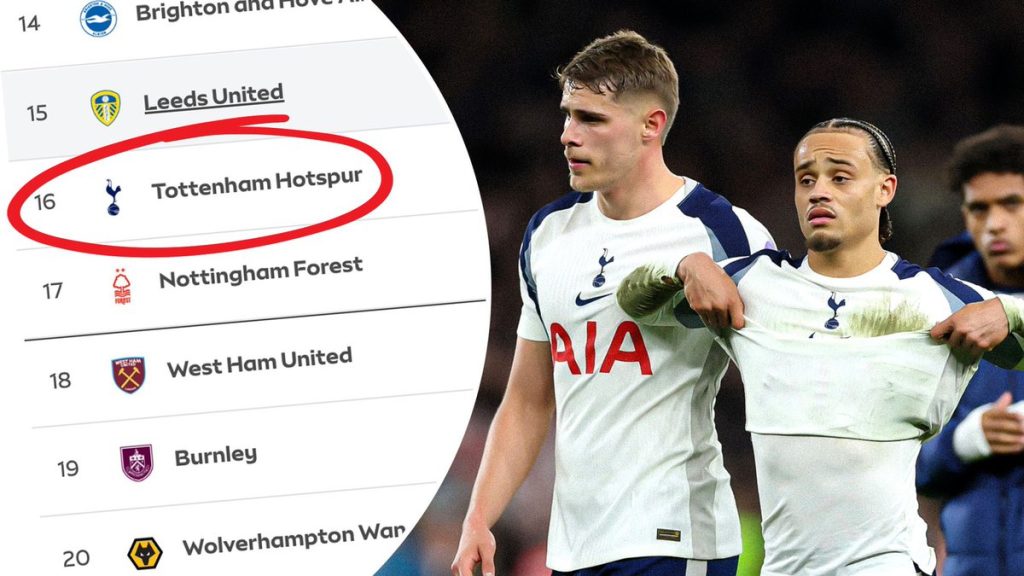
As Tottenham Hotspur confronts mounting challenges under Igor Tudor’s leadership, with the Premier League season entering its critical phase, the club’s precarious position near the relegation zone carries significant financial implications. Spurs currently sit in 16th place, just four points clear of the drop zone with ten matches left, intensifying the pressure on the squad.
According to revelations from The Athletic, most Tottenham players have contracts containing clauses that enforce an automatic salary reduction of around 50% if the club is relegated to the Championship. These salary reduction clauses, incorporated during Daniel Levy’s tenure, aim to safeguard the club’s financial health in the event of a worst-case scenario. This arrangement acknowledges the stark difference in revenue streams and wages between the top tier and the second division of English football.
In brief:
- Tottenham players face a potential wage cut of nearly 50% tied to relegation from the Premier League.
- Most player contracts include these salary reduction clauses as a financial safeguard.
- Spurs currently hover just above the drop zone, intensifying the reality of these clauses.
- The strategy stemmed from former chairman Daniel Levy’s foresight to protect the club financially.
- This pay cut highlights the dramatic financial consequences of relegation within football.
Financial Safeguards in Tottenham Players’ Contracts Amid Relegation Threat
With Tottenham’s form faltering after a difficult start for manager Igor Tudor, the looming prospect of relegation carries more than just on-pitch consequences. The players’ pay cut clauses are designed to halve wages if Spurs were to drop out of the Premier League, reflecting the club’s pragmatic approach to financial risk management.
These contract provisions mean that a majority of the squad, largely those signed during Levy’s era, are bound to sudden and significant earning reductions should Tottenham slip into the Championship. This preemptive measure serves both as a deterrent to complacency and a means to shield the club from untenable wage bills in a lower league.

Context of Tottenham’s Current Season and Relegation Risk
Troubled results against rivals Arsenal and Fulham have left Spurs precariously placed near the bottom of the table. The team’s football strategy under Tudor has yet to gel fully, resulting in inconsistent performances and mounting pressure to avoid the drop. With just four points separating them from relegation, the financial and sporting stakes are intertwined.
This situation underscores the importance of the pre-negotiated clauses, ensuring that player salaries remain sustainable despite the club’s potential loss of Premier League revenues such as broadcasting rights and sponsorship deals.
Implications of Salary Reduction: Motivation or Morale Risk?
The implementation of up to a 50% pay cut depending on relegation status can act as a double-edged sword. On one hand, it creates a clear incentive for Tottenham players to fight hard for survival in the top tier, reinforcing the competitive edge required during this challenging campaign.
Conversely, such drastic potential cuts could impact morale and create uncertainty among the squad, especially for those whose contracts are heavily reliant on Premier League earnings. The psychological dimension of this financial pressure adds complexity to Tudor’s task of stabilizing team performance.