

Manchester United is navigating a pivotal moment in its managerial tenure with recent discussions involving Ole Gunnar Solskjær and Michaël Carrick. Following the departure of Ruben Amorim, the club’s hierarchy has engaged in strategic talks to identify a suitable interim coach capable of steering the team through the remainder of the Premier League season. Both Solskjær and Carrick, figures deeply ingrained in the club’s fabric and history, are at the forefront of this decision-making process, reflecting the management’s preference for familiarity combined with proven leadership. These discussions underscore Manchester United’s approach to maintain stability and confidence within the squad while evaluating long-term leadership options.
Amidst these developments, Darren Fletcher has been appointed as the temporary caretaker, providing continuity as the club conducts a broader search. The inclusion of other candidates such as Ruud van Nistelrooy further demonstrates the club’s commitment to exploring a range of experienced options. This period of transition is critical, not just for immediate results but also for shaping the future team strategy and player development pathways.
Inside Manchester United’s Football Meeting with Ole Gunnar Solskjær and Michaël Carrick
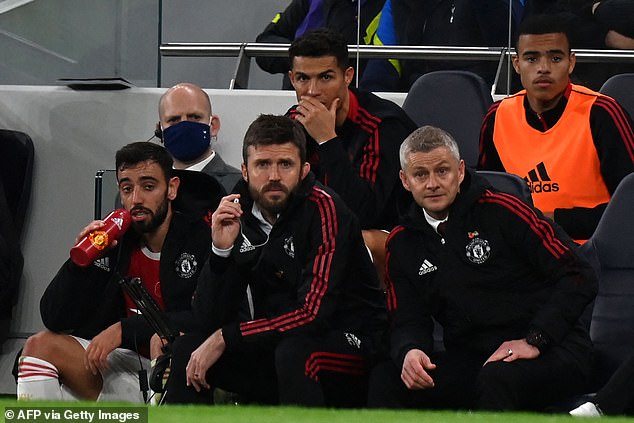
In recent weeks, Manchester United held an essential football meeting with two of its illustrious former players and coaches: Ole Gunnar Solskjær and Michaël Carrick. Both men have strong ties to the club, previously tasked with managing the squad during particularly challenging phases. Solskjær, who led the team between 2018 and 2021, expressed a clear willingness to return, signaling his intent to contribute to the club’s resurgence. Meanwhile, Carrick’s experience within the coaching staff and his understanding of the current squad dynamics position him also as a strong contender for the interim role.
This round of coach discussions reflects a pragmatic approach by the club’s management, balancing tradition with tactical innovation in the Premier League landscape. The engagement with these candidates also highlights the club’s focus on ensuring alignment with its core values and long-term vision, particularly with respect to youth integration and competitive consistency.

Management Strategy: Weighing Experience and Club Heritage
Club management at Manchester United is carefully calibrating the next steps by leveraging the experience of former club stalwarts. Both Solskjær and Carrick are free agents, which simplifies contractual negotiations but does not diminish the complexities surrounding team strategy and alignment of expectations. The club’s leadership is cognizant of the need to stabilize performance on the pitch while building a robust framework for player development and tactical evolution.
Parallel to these talks, the recruitment process includes assessing external candidates to broaden the potential pool. However, the preference for internal legends and familiar figures speaks to a larger cultural strategy within Manchester United, aiming to reinforce an identity synonymous with resilience and unity.
Potential Impact of the Interim Coaching Appointment on Premier League Campaign
The appointment of either Solskjær or Carrick as an interim coach is expected to bear significant influence on Manchester United’s trajectory in the Premier League. Both coaches bring extensive insight into club operations, player strengths, and the pressures of top-tier football management. This familiarity could foster a quick tactical adaptation and enhanced morale among the players, providing a competitive edge in upcoming fixtures.
Moreover, the interim period serves as a critical testing ground for club management to evaluate long-term managerial candidates in context. The continuation of Darren Fletcher’s interim stewardship ensures a seamless transition, minimizing disruption during the ongoing football season.
Balancing Short-Term Performance and Long-Term Vision
The current coaching deliberations are not merely about filling a vacancy but represent a strategic nexus where immediate results and future ambitions converge. Manchester United’s leadership is mindful that the right interim manager needs to blend tactical acuity with the ability to foster development among younger players, a hallmark of the club’s sustaining success.
Football coaching at this level demands resilience, adaptability, and keen insight, qualities both Solskjær and Carrick have demonstrated in their tenures. Their potential return encapsulates a narrative of loyalty and continuity, crucial in navigating the club’s challenges ahead in a fiercely competitive Premier League environment.
For further insight into Manchester United’s evolving coaching structure and transfer news, resources such as latest transfer updates and analyses provide valuable perspectives on how such managerial decisions sync with broader team-building efforts.